
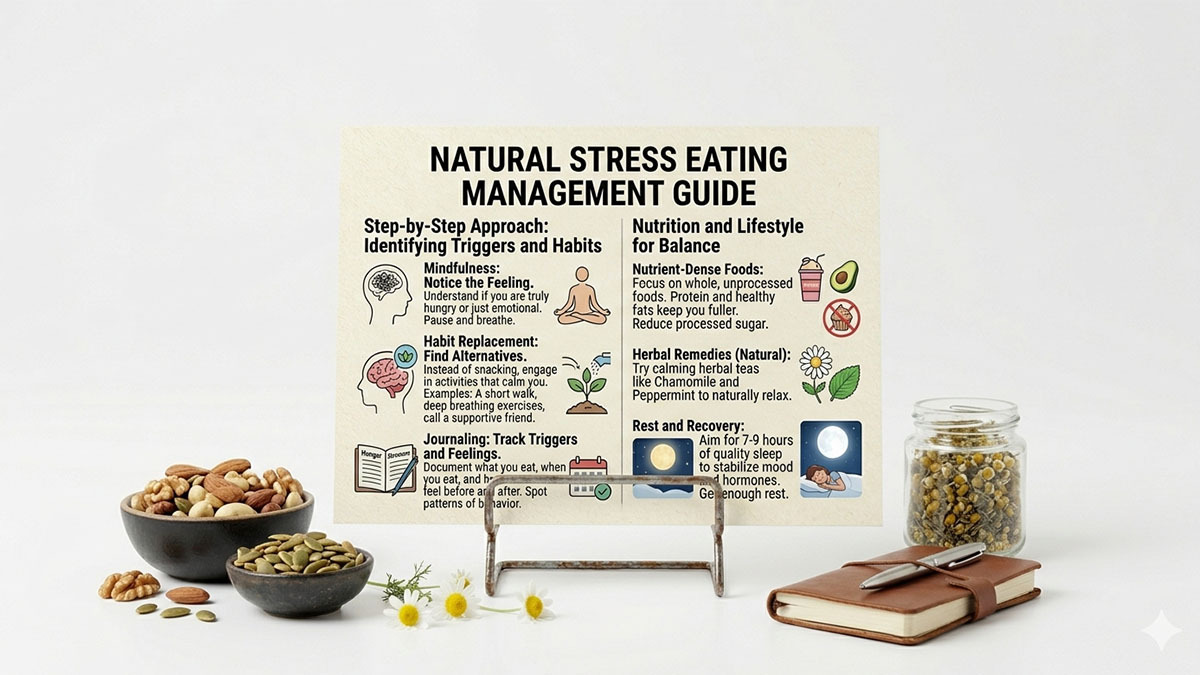
We have all been there. After a long, exhausting day at the office or a tense conversation with a loved one, we find ourselves standing in front of the open refrigerator, searching for something anything to make us feel better. In that moment, we aren’t actually hungry for nutrients; we are hungry for comfort. This common behavior is what we call emotional eating, and it is a completely human response to pressure. However, when it becomes a regular habit, it can leave us feeling guilty, sluggish, and disconnected from our bodies. Learning how to manage stress eating naturally is not about having superhuman willpower or punishing yourself with restrictive diets. Instead, it is about understanding your brain’s chemistry, showing yourself compassion, and building a toolkit of healthy habits that address the root cause of your tension rather than just masking the symptoms with sugar or salt.
The first step in this journey is realizing that stress eating is actually a biological survival mechanism. When you are under pressure, your body releases cortisol, often known as the stress hormone. Cortisol triggers cravings for “high-reward” foods those packed with fat and sugar because your brain thinks it needs a quick burst of energy to fight off a threat. In ancient times, that threat might have been a predator; today, it is usually an overflowing inbox or a tight deadline. Because your brain hasn’t evolved as fast as your lifestyle, it still asks for a donut when you are stressed. By understanding this, you can stop blaming your character and start looking at the situation as a puzzle to be solved. Knowing how to manage stress eating naturally starts with this shift in perspective: you are not weak; you are simply responding to an internal alarm system that needs a different kind of silencing.
One of the most effective ways to break the cycle is to practice what experts call “The Pause.” When you feel that sudden, urgent drive to eat something crunchy or sweet, give yourself just five minutes before you act. During these five minutes, check in with your physical sensations. Ask yourself, “Is my stomach growling, or is my chest tight?” Often, physical hunger comes on gradually and can be satisfied by many different types of food. Emotional hunger, however, comes on like a lightning bolt and usually demands one specific thing, like chocolate or chips. This moment of mindfulness is a core component of how to manage stress eating naturally. It creates a tiny gap between the trigger and the reaction, allowing you to choose a different path, like drinking a glass of water or taking a few deep breaths, which can often lower the intensity of the craving.
Hydration plays a much bigger role in our eating habits than we realize. The human brain is notoriously bad at distinguishing between thirst and hunger. Many of us walk around in a state of mild dehydration, which the body interprets as an energy deficit, leading to cravings. When you are looking for how to manage stress eating naturally, start by keeping a reusable water bottle with you throughout the day. If a stress-induced craving hits, try drinking a glass of cool water first. You might find that once you are hydrated, the urgent need to snack dissipates. Herbal teas are also a fantastic tool. The ritual of brewing a cup of chamomile or peppermint tea provides a sensory distraction and a calming warmth that mimics the comfort we often seek from food, but without the subsequent sugar crash.
Another pillar of natural stress management is the quality of your sleep. When you are sleep-deprived, your levels of ghrelin (the hunger hormone) go up, and your levels of leptin (the fullness hormone) go down. This creates a perfect storm where you feel hungrier than usual and less satisfied by what you eat. If you want to master how to manage stress eating naturally, you must prioritize your rest. A well-rested brain has much more capacity to regulate emotions and resist impulsive urges. Try to create a soothing bedtime routine that doesn’t involve screens, as the blue light can interfere with your sleep quality. When you wake up feeling refreshed, you will find that the “cravings monster” is much quieter throughout the day, making it easier to stick to your healthy intentions.
Movement is also a powerful natural “antidote” to the cortisol that drives us to overeat. You don’t need to run a marathon to see the benefits. Even a ten-minute walk around the block can help lower your stress levels and boost your mood by releasing endorphins. Endorphins are your body’s natural feel-good chemicals, and they provide a much longer-lasting sense of peace than a bag of cookies ever could. When you find yourself reaching for food as a coping mechanism, try stepping outside for a moment. The change of scenery and the fresh air can reset your nervous system. This physical shift is a vital part of how to manage stress eating naturally because it addresses the physical tension in your body that is causing the mental desire to eat.
We also need to look at what we are putting on our plates during our regular meals. If you are constantly skipping meals or eating very low-calorie salads, your body is going to be in a state of “alert” even before you get stressed. To learn how to manage stress eating naturally, you need to provide your body with stable energy. Focus on complex carbohydrates like sweet potatoes or oats, lean proteins, and plenty of healthy fats like avocado or nuts. These foods take longer to digest and keep your blood sugar stable. When your blood sugar is steady, you won’t experience those desperate “hangry” moments that make stress eating almost impossible to avoid. Eating enough during the day is actually one of the best defenses against overeating at night.
Mindfulness and meditation might sound like buzzwords, but they are scientifically proven to help with emotional regulation. You don’t have to sit on a cushion for an hour. Simply practicing “box breathing” inhaling for four seconds, holding for four, exhaling for four, and holding for four can tell your brain that you are safe. When the brain feels safe, it stops demanding high-calorie rewards. Incorporating these small moments of stillness into your day is a beautiful way to learn how to manage stress eating naturally. It helps you become an observer of your emotions rather than a victim of them. You start to see the stress coming and can say to yourself, “I am feeling overwhelmed right now, and that is okay. I don’t need to eat to fix this feeling.”
Lastly, it is important to build a “Self-Care Menu” that doesn’t involve food. Often, we eat because it is the easiest and fastest way to get a hit of dopamine. To counter this, make a list of activities that make you feel good and keep it on your phone or your fridge. This could include calling a friend, taking a warm bath, listening to a favorite podcast, or even doing a quick puzzle. When you are stressed, your brain is looking for a distraction. By having these options ready, you make it easier to choose a non-food reward. This proactive approach is a cornerstone of how to manage stress eating naturally. It is about replacing a habit that doesn’t serve you with one that actually restores your energy and peace of mind.
In conclusion, moving away from emotional eating is a journey of self-discovery. There will be days when you succeed and days when you find yourself back at the bottom of a chip bag, and that is perfectly fine. The goal is progress, not perfection. By staying hydrated, getting enough sleep, moving your body, and practicing mindfulness, you are building a resilient foundation. You are learning how to manage stress eating naturally by listening to what your body actually needs which is usually rest, connection, or a deep breath rather than what it thinks it wants in a moment of panic. Treat yourself with the same kindness you would offer a friend, and watch as your relationship with food and stress begins to transform into something much more harmonious and healthy.