
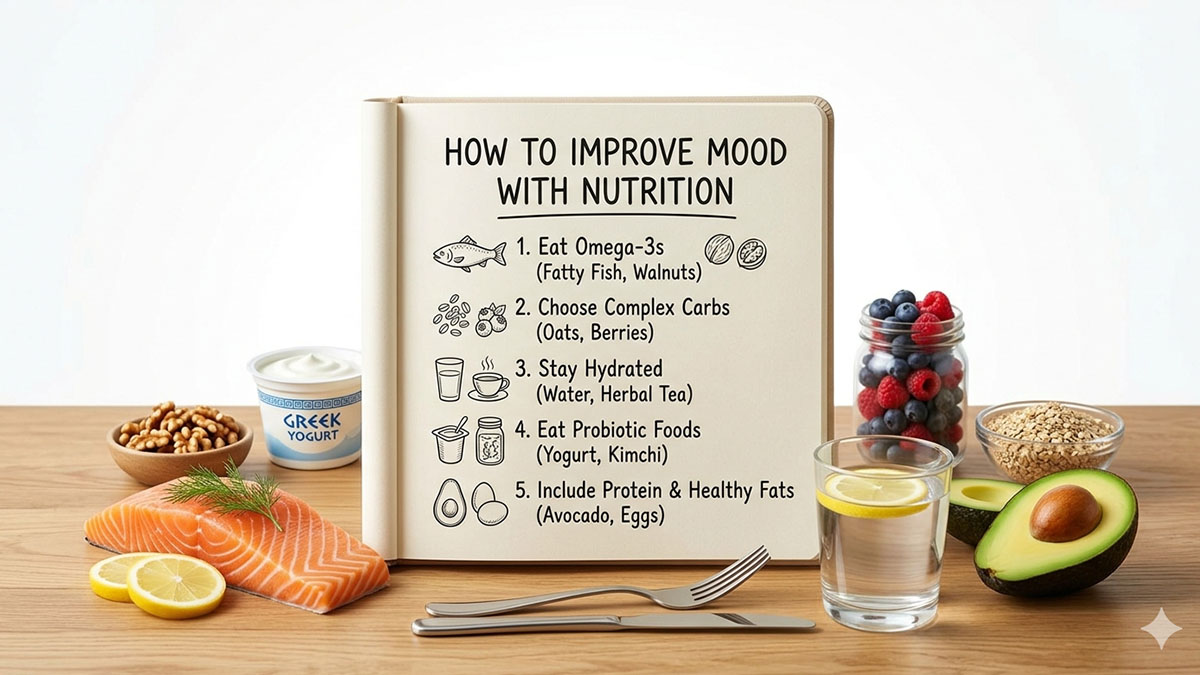
Food is often discussed in terms of waistlines, muscle growth, or physical energy, but we rarely stop to consider how our last meal influenced our current emotional state. The connection between what we put on our plates and how we feel mentally is one of the most exciting areas of health science today. We are learning that the brain is a high-performance organ that requires specific fuel to keep our spirits high and our minds calm. If you have been feeling a bit sluggish, anxious, or just “off” lately, the solution might not be found in a self-help book, but rather in your grocery cart. Learning how to improve mood with nutrition is about more than just avoiding “junk” food; it is about strategically choosing ingredients that support the delicate chemistry of your brain. By making small, intentional changes to your eating habits, you can create a stable internal environment where happiness and resilience can thrive.
To understand the power of food over our feelings, we have to look at the gut-brain axis. This is a two-way communication highway between your digestive system and your central nervous system. In fact, about 95% of your serotonin the hormone responsible for regulating mood, sleep, and appetite is produced in your gastrointestinal tract. Your gut is lined with millions of nerve cells, and the “good” bacteria living there play a vital role in producing the chemicals that tell your brain everything is okay. When you focus on how to improve mood with nutrition, you are essentially taking care of your gut bacteria. When these bacteria are well-fed with fiber and diverse nutrients, they send positive signals to your brain. If they are starved or fed exclusively on processed sugars, they send signals of distress, which can manifest as irritability, brain fog, or low mood.
One of the most important rules for a stable mood is blood sugar management. We have all experienced the “sugar crash” that moment after a heavy dessert or a sugary drink where we feel tired and grumpy. This happens because a massive spike in glucose is followed by a sharp drop in insulin, leaving your brain starved for energy. To master how to manage mood with nutrition, you must prioritize complex carbohydrates over simple sugars. Foods like oats, quinoa, brown rice, and sweet potatoes release energy slowly into the bloodstream. This steady supply of fuel ensures that your brain doesn’t go through the emotional roller coaster of highs and lows. When your energy is stable, your patience is higher, your focus is sharper, and your overall outlook on life remains much more positive.
Healthy fats are another non-negotiable component of a “happy” diet. Your brain is roughly 60% fat, and it needs high-quality fats to maintain its structure and function. Omega-3 fatty acids, found in oily fish like salmon, walnuts, flaxseeds, and chia seeds, are particularly important. These fats are essential for reducing inflammation in the brain, which has been closely linked to mood disorders. When you are looking for ways on how to improve mood with nutrition, think of Omega-3s as the “oil” that keeps your mental gears turning smoothly. They help brain cells communicate more effectively with one another, making it easier for you to process stress and maintain emotional balance even when life gets a little chaotic.
Protein is also a major player in mental health because it provides the amino acids necessary for neurotransmitter production. For example, the amino acid tryptophan is a precursor to serotonin. You can find tryptophan in turkey, chicken, eggs, and tofu. If you don’t eat enough protein, your brain literally lacks the building blocks it needs to create the chemicals that make you feel relaxed and satisfied. Incorporating a source of lean protein into every meal is a simple but effective strategy for anyone wondering how to improve mood with nutrition. It keeps you feeling full, prevents muscle loss, and ensures that your “feel-good” hormones are being manufactured at an optimal rate throughout the day.
We cannot overlook the importance of vitamins and minerals, specifically B vitamins and magnesium. B vitamins, particularly B12 and folate, are involved in the synthesis of brain chemicals that affect mood. A deficiency in these can lead to feelings of fatigue and sadness. Leafy greens like spinach and kale, as well as beans and eggs, are excellent sources. Magnesium, often called “nature’s relaxant,” helps regulate the stress response. If you find yourself feeling anxious or having trouble sleeping, you might need more magnesium-rich foods like dark chocolate, almonds, and pumpkin seeds. Understanding how to improve mood with nutrition means recognizing that these micronutrients are the tiny spark plugs that keep your emotional engine running.
Hydration is perhaps the simplest yet most neglected part of the equation. Even mild dehydration can lead to irritability, poor concentration, and headaches. The brain is very sensitive to water balance, and when it is thirsty, it struggles to perform even basic emotional regulation tasks. If you want to know how to improve mood with nutrition, start by drinking enough water. Try to carry a reusable bottle and sip throughout the day. Often, the “3:00 PM slump” that we blame on a lack of caffeine is actually just a sign of dehydration. By keeping your cells hydrated, you allow your brain to function at its full potential, keeping your mood light and your energy high.
Fermented foods are a “secret weapon” for mental wellness. In the last few years, foods like kimchi, sauerkraut, kefir, and Greek yogurt have gained popularity for their probiotic content. As we mentioned earlier, a healthy gut leads to a healthy brain. By introducing live, beneficial bacteria into your system, you are directly supporting the production of neurotransmitters. Many people find that once they start including a small serving of fermented food in their daily routine, their anxiety levels decrease and their overall sense of well-being increases. This is a practical and delicious way to apply the principles of how to improve mood with nutrition in a way that yields tangible results.
Mindful eating is the final piece of the puzzle. It isn’t just about what you eat, but how you eat. In our busy lives, we often eat on the go, scrolling through our phones or working at our desks. This puts the body in a “fight or flight” state, which hinders digestion and prevents us from truly enjoying our food. To maximize the benefits of how to improve mood with nutrition, try to slow down. Sit at a table, take a few deep breaths before you start, and actually taste your food. This practice lowers cortisol levels and allows you to better listen to your body’s hunger and fullness cues. When you eat with intention, you create a positive relationship with food, which is the foundation of long-term mental health.
In conclusion, your diet is one of the most powerful tools you have to influence your happiness. While food cannot solve every problem, it provides the biological foundation upon which your mental health is built. By focusing on stable blood sugar, healthy fats, adequate protein, and gut-loving probiotics, you are giving your brain the best possible chance to succeed. Learning how to improve mood with nutrition is a journey of self-discovery one where you learn to listen to what your body is telling you. Start today by adding one extra serving of greens or a handful of walnuts to your day, and notice how much brighter the world looks when your brain is properly nourished. You are not just eating for your body; you are eating for your mind, your spirit, and your future happiness.