
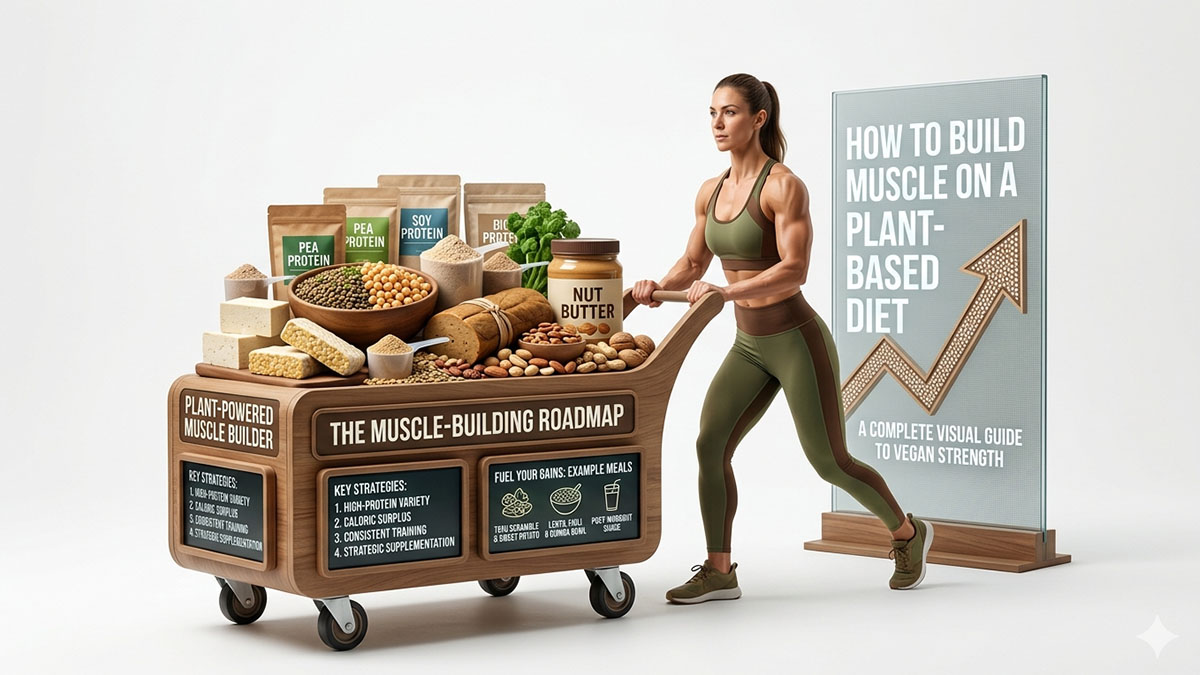
For a long time, there was a common myth circulating in gyms and fitness centers that you needed to consume massive amounts of animal products to see any real progress in strength or physique. Many people believed that without steak, eggs, and whey protein, your muscles simply wouldn’t have the “bricks” they needed to grow. However, as sports science has evolved and more professional athletes have made the switch to vegan lifestyles, we have learned that the body doesn’t actually care where its amino acids come from, as long as it gets enough of them. If you have been wondering how to build muscle on plant based diet, you are standing at the threshold of a journey that can lead to incredible physical results, improved recovery times, and a much lighter footprint on the planet. Building a powerful, muscular frame using only plants is not only possible; it is a highly effective way to optimize your health while reaching your fitness goals.
To understand the core of how to build muscle on plant based diet, we first have to look at the biology of muscle growth. To grow larger and stronger, your muscles need two primary things: a stimulus (resistance training) and sufficient energy and nutrients to repair the micro-tears caused by that training. This means that regardless of what you eat, you must be in a slight calorie surplus and hit your protein targets. On a plant-based diet, some foods are less calorie-dense than meat, which means you might actually need to eat a larger volume of food than you are used to. This is often the biggest hurdle for beginners. You cannot simply swap a chicken breast for a small salad and expect to grow. You need to focus on calorie-dense plant foods like legumes, grains, nuts, and seeds to ensure your body isn’t burning your hard-earned muscle for fuel.
Protein is usually the biggest concern for anyone asking how to build muscle on plant based diet. Proteins are made up of amino acids, and while it is true that animal proteins are “complete” (containing all nine essential amino acids), you can easily get everything you need from plants by eating a variety of sources. You don’t even need to worry about “combining” proteins at every single meal, as long as you get a mix throughout the day. Lentils, chickpeas, black beans, and edamame are fantastic staples. If you want something with a meatier texture, seitan (made from wheat gluten) is an absolute powerhouse, containing almost as much protein as chicken per gram. Tofu and tempeh are also essential, as they are complete proteins and incredibly versatile for cooking. By rotating these sources, you ensure your “amino acid pool” is always full and ready for muscle repair.
Another vital secret regarding how to build muscle on plant based diet is the importance of complex carbohydrates. Carbohydrates are the primary fuel source for high-intensity training. When you lift weights, your body uses glycogen stored in your muscles. If your carb intake is too low, your performance will suffer, and you won’t be able to push the heavy weights required for growth. Whole grains like quinoa, brown rice, oats, and buckwheat are excellent because they provide long-lasting energy and even contribute a fair amount of protein. Additionally, starchy vegetables like sweet potatoes and squash are perfect for post-workout meals to help replenish your energy stores quickly. When you fuel your workouts correctly with plants, you will often find that you have more sustained energy and less of a “crash” than you did on a high-protein, low-carb animal-based diet.
Recovery is the phase where the actual growth happens, and this is where a plant-based diet truly shines. Plants are naturally high in antioxidants and phytonutrients that help fight inflammation. When you train hard, you create oxidative stress in your body. Because how to build muscle on plant based diet involves eating a high volume of fruits, vegetables, and berries, you are flooding your system with the tools it needs to dampen that inflammation. Many athletes find that they experience less muscle soreness and can return to the gym sooner when they eat a diet rich in colorful produce. Tart cherry juice, turmeric, and leafy greens are particularly well-known for their ability to speed up the recovery process. The faster you recover, the more frequently you can train, which leads to faster muscle gains over time.
Healthy fats are the final piece of the nutritional puzzle. While you want to keep your fat intake moderate to leave room for protein and carbs, you need fats for hormonal health, including the production of testosterone, which is crucial for muscle building. When learning how to build muscle on plant based diet, you should focus on whole-food fat sources. Avocados, walnuts, chia seeds, hemp hearts, and flaxseeds are incredible. They provide the omega-3 fatty acids that support joint health and reduce systemic inflammation. A handful of walnuts or a tablespoon of hemp seeds added to your morning smoothie is a simple way to ensure your hormones are supported so your body remains in an “anabolic” or building state.
Supplements can be helpful, though they are not a replacement for whole foods. A high-quality plant-based protein powder (like a pea and rice blend) can make it much easier to hit your protein goals, especially on busy days. Creatine monohydrate is another supplement that is highly recommended for everyone, but especially for those on a plant-based diet, as it is primarily found in red meat. Creatine helps with power output and muscle cell hydration, making it a safe and effective way to boost your results. Additionally, you should ensure you are taking a Vitamin B12 supplement, as this is the one nutrient that is difficult to get reliably from plants alone. When you cover these bases, you remove any potential roadblocks to your progress.
Progressive overload remains the golden rule of muscle building, regardless of your diet. You must consistently challenge your muscles by increasing the weight, the repetitions, or the intensity of your workouts. When you combine a solid training program with the principles of how to build muscle on plant based diet, the results will follow. It is important to be patient. Muscle growth is a slow process for everyone. Track your lifts, take progress photos, and listen to your body. If you feel tired, you might need more calories. If you aren’t recovering, you might need more protein or better sleep. By being a “scientist” of your own body, you can fine-tune your plant-based approach to work perfectly for your unique biology.
In conclusion, the era of the “weak vegan” is long gone. We now see bodybuilders, powerlifters, and endurance athletes thriving on a 100% plant-based lifestyle. Learning how to build muscle on plant based diet is an empowering process that proves you can achieve peak physical performance while aligning with values of compassion and sustainability. It requires a bit more planning and a willingness to eat larger, more colorful meals, but the payoff is a body that is not only strong on the outside but healthy and vibrant on the inside. Embrace the lentils, load up on the greens, and lift heavy. You have all the tools you need right in the produce aisle to build the physique of your dreams.