
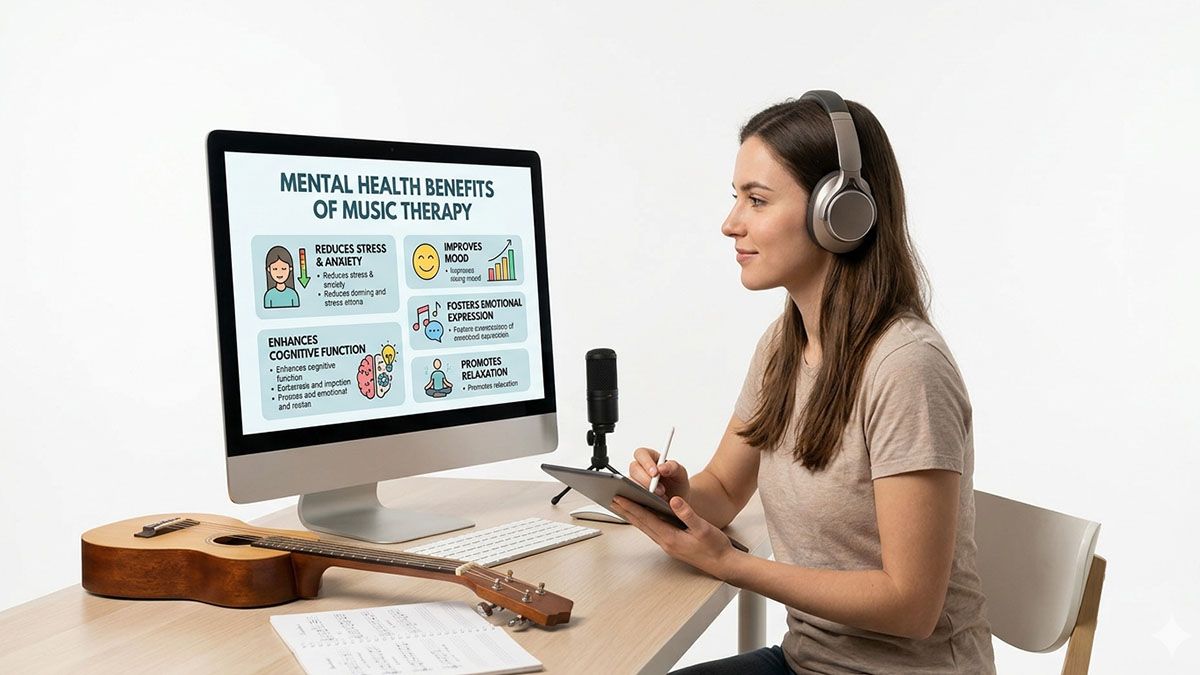
Music has been a part of the human experience since the beginning of time. From ancient tribes drumming around a fire to modern individuals wearing noise-canceling headphones on a busy subway, music is a universal language that speaks to us in ways that words often cannot. While we all know that a favorite song can lift our spirits or make us feel nostalgic, there is a much deeper, clinical application for this power. Professional music therapy is an evidence-based practice that uses musical interventions to accomplish individualized goals within a therapeutic relationship. When we look closely at the mental health benefits of music therapy, we see a transformative tool that helps people navigate the complexities of anxiety, depression, trauma, and everyday stress. It is not just about listening to pleasant tunes; it is about using rhythm, melody, and lyrics to unlock the mind and heal the heart.
The first major area where we see the mental health benefits of music therapy is in the reduction of stress and anxiety. In our fast-paced modern world, our nervous systems are often stuck in a state of “fight or flight.” This constant state of high alert leads to increased cortisol levels, which can damage our physical health and cloud our mental clarity. Music therapy provides a safe “container” for relaxation. A trained therapist might use receptive music listening, where the patient focuses on specific sounds to ground themselves in the present moment. Because music has a direct link to the autonomic nervous system, slow and steady rhythms can actually lower a person’s heart rate and blood pressure. This physiological shift tells the brain that it is safe to relax, providing immediate relief for those struggling with chronic worry or panic disorders.
For those living with depression, the mental health benefits of music therapy offer a unique way to reconnect with emotions. One of the most difficult aspects of depression is the feeling of numbness or being “frozen” in a state of sadness. Music has a way of bypassing the logical part of the brain and tapping directly into the limbic system, which is the seat of our emotions. Through active music-making such as playing an instrument, singing, or songwriting individuals can express feelings that are too painful or complicated to put into prose. This creative release acts as a form of emotional catharsis. It allows a person to externalize their internal struggle, making it feel more manageable. The act of creating something beautiful out of pain can provide a sense of accomplishment and self-worth that is often lost during a depressive episode.
Trauma and Post-Traumatic Stress Disorder (PTSD) are also areas where music therapy shows remarkable results. Traumatic memories are often stored in parts of the brain that do not communicate well with our verbal centers. This is why many trauma survivors find traditional “talk therapy” difficult or overwhelming. The mental health benefits of music therapy include providing a non-verbal outlet for processing these memories. Rhythmic entrainment, where a person plays a drum in time with a therapist, can help regulate a nervous system that has been shattered by trauma. It creates a sense of predictability and safety. Furthermore, lyric analysis allows patients to identify with the stories of others, helping them realize they are not alone in their experiences. This builds a bridge toward healing without forcing the person to relive the trauma through direct speech before they are ready.
One of the most fascinating mental health benefits of music therapy is its impact on cognitive function and focus. For individuals dealing with ADHD or age-related cognitive decline, music provides a structured framework for the brain. The brain loves patterns, and music is essentially a complex series of patterns. Engaging with music requires the brain to use multiple areas at once auditory, visual, motor, and emotional. This “full-brain workout” can help improve memory, attention span, and executive function. In many cases, music therapy is used to help people with dementia or Alzheimer’s reconnect with their identities. Even when a person has lost the ability to recognize faces or speak clearly, they often retain the ability to sing songs from their youth. This “musical memory” provides a vital spark of joy and connection in an otherwise confusing world.
Social connection is another pillar of the mental health benefits of music therapy. Many mental health struggles lead to isolation, but music is inherently social. Group music therapy sessions, such as drum circles or community choirs, foster a sense of belonging and collective purpose. When people play music together, their brain waves and heartbeats often begin to synchronize. This phenomenon creates a deep sense of empathy and shared experience. For teenagers or individuals with social anxiety, the “buffer” of an instrument or a song makes it easier to interact with others. It provides a common ground where they can contribute to a group without the pressure of perfect social performance. This reduction in isolation is a powerful factor in preventing the worsening of mental health conditions.
Self-expression and identity building are core to the mental health benefits of music therapy. Many of us use music to define who we are, but in a therapeutic setting, this goes much deeper. Songwriting is a particularly powerful tool used by music therapists. A patient might take a familiar melody and write new lyrics that describe their current life situation. This allows them to take ownership of their narrative. Instead of being a “victim” of a diagnosis, they become a “creator” of a work of art. This shift in perspective is crucial for building resilience. When a person realizes they have the power to change a lyric or create a new harmony, they begin to realize they also have the power to make changes in their personal lives.
It is also important to note that the mental health benefits of music therapy are accessible to everyone, regardless of musical talent. You do not need to be a virtuoso or have a “good” singing voice to benefit from this practice. In fact, some of the most profound breakthroughs happen when a person picks up an instrument for the first time. The goal is not to produce a masterpiece for the public, but to engage in a process of self-discovery. The therapist is there to guide the experience, ensuring that the music serves the patient’s emotional needs. This lack of judgment creates a space where a person can be truly vulnerable, which is often where the most significant healing takes place.
In conclusion, the mental health benefits of music therapy represent a bridge between the arts and science. As we continue to learn more about how the brain processes sound, we are discovering that music is not just entertainment; it is a biological necessity for emotional regulation and mental clarity. Whether it is used to calm an anxious mind, provide a voice for the voiceless, or spark a memory in a fading consciousness, music therapy is a testament to the resilience of the human spirit. If you or someone you love is struggling with mental health, consider the power of the beat and the melody. Sometimes, the best way to heal the mind is to simply let the music play and allow it to guide you back to yourself.