
In a world filled with flashy diet trends, miracle pills, and confusing nutritional advice, it can be hard to know what to eat for true health. One day we are told to avoid all fats, and the next day we are told that carbohydrates are the enemy. However, amidst all this noise, there is one philosophy that has stood the test of time and remains the gold standard for health experts everywhere: the whole foods diet. This approach is not about strict rules or starving yourself; it is about returning to the basics and choosing foods that are as close to their natural state as possible. When we look at the whole foods diet benefits long term, we see a picture of a life lived with more energy, fewer chronic illnesses, and a much deeper connection to the fuel that keeps our bodies running.
To understand why this way of eating is so powerful, we first have to define what a “whole food” actually is. A whole food is something that has not been processed, refined, or altered by human engineering. It is an apple instead of apple juice, a baked potato instead of a bag of chips, and a piece of grilled fish instead of a breaded fish stick. These foods are packed with the original fiber, vitamins, minerals, and antioxidants that nature intended for us to consume. When we prioritize these items, we are giving our bodies the complex information they need to repair cells, balance hormones, and fight off inflammation. The whole foods diet benefits long term are not just about weight loss; they are about building a foundation for a body that can age gracefully and maintain its strength well into the later years of life.
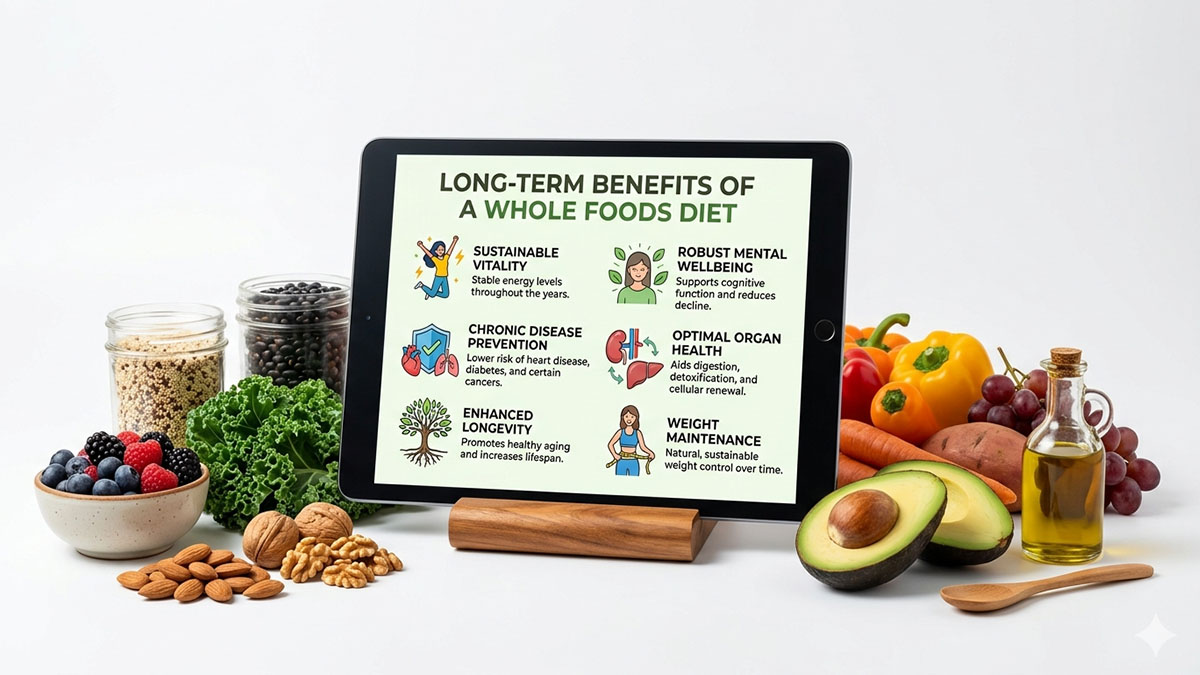
One of the most significant whole foods diet benefits long term is the prevention and management of chronic diseases. Most of the leading causes of death in the modern world, such as heart disease, type 2 diabetes, and certain types of cancer, are closely linked to the consumption of highly processed foods. Processed foods are typically loaded with added sugars, unhealthy trans fats, and excessive sodium. Over time, these ingredients damage our arteries, stress our pancreas, and create a state of chronic inflammation. By switching to a diet focused on whole grains, legumes, fruits, vegetables, and lean proteins, you are removing these triggers. You are essentially cleaning up the internal environment of your body, allowing your organs to function without the constant burden of chemical additives.
Heart health is another area where the whole foods diet benefits long term truly shine. Whole foods like oats, beans, nuts, and leafy greens are incredibly high in soluble fiber. This fiber acts like a sponge in your digestive system, soaking up “bad” cholesterol and removing it from your body before it can clog your arteries. Furthermore, the antioxidants found in colorful fruits and vegetables help protect the lining of your blood vessels from oxidative stress. When you eat this way for years, your blood pressure tends to stay within a healthy range, and your heart doesn’t have to work as hard to pump blood. This long-term cardiovascular support is one of the best ways to ensure a long and active life.
Let’s talk about digestive health. Your gut is home to trillions of bacteria that play a massive role in your immune system, your mood, and even your weight. These bacteria thrive on the diverse fibers found in whole plant foods. When you eat a diet high in processed foods, you are essentially starving your “good” bacteria and feeding the “bad” ones. This can lead to bloating, irregular digestion, and even mental health struggles. One of the key whole foods diet benefits long term is the creation of a diverse and resilient gut microbiome. As you consistently feed your body whole foods, your digestion becomes more efficient, your immune system becomes stronger, and you may even notice that your skin becomes clearer and your mood becomes more stable.
Blood sugar control is another vital aspect of this lifestyle. When we eat refined flours and sugary snacks, our blood sugar spikes rapidly, forcing our bodies to release a flood of insulin. Over time, this can lead to insulin resistance and type 2 diabetes. However, whole foods like brown rice, lentils, and sweet potatoes contain complex carbohydrates that take a long time to break down. This results in a slow, steady release of energy into the bloodstream. This stability is one of the most important whole foods diet benefits long term because it prevents the metabolic damage that leads to many modern health complications. It also means you won’t suffer from the “sugar crashes” that make you feel tired and irritable in the afternoon.
Sustained energy and mental clarity are perhaps the most immediate rewards people notice, but they also contribute to the whole foods diet benefits long term. When your body is fueled by high-quality nutrients rather than empty calories, every cell functions more effectively. You might find that you no longer need five cups of coffee to get through the day or that the “brain fog” you used to experience has vanished. This consistent energy allows you to stay physically active, which further compounds the health benefits. When you feel good, you are more likely to exercise, sleep better, and manage stress effectively, creating a positive feedback loop that lasts for decades.
We must also consider the impact on weight management. The whole foods diet benefits long term include a natural ability to maintain a healthy weight without the need for constant calorie counting. Whole foods are naturally more satiating than processed ones. Because they are high in fiber and water, they take up more space in your stomach, signaling to your brain that you are full. It is very easy to overeat cookies or chips because they don’t provide these “fullness” signals. It is very difficult, however, to overeat broccoli, apples, or beans. By shifting your diet, you naturally lower your calorie intake while actually eating a higher volume of food. This makes it much easier to stay at a healthy weight without feeling deprived or hungry all the time.
Longevity is the ultimate goal for many who adopt this lifestyle. Studies of “Blue Zones” areas of the world where people live the longest consistently show that these populations base their diets on whole, plant-based foods. They eat what grows in their gardens and what is locally available, avoiding the aisles of packaged goods found in modern supermarkets. The whole foods diet benefits long term culminate in a body that is less prone to the “wear and tear” of aging. By providing your cells with a constant supply of protective phytonutrients, you are giving your DNA a better chance at staying healthy and your tissues a better chance at regenerating.
In conclusion, a whole foods diet is not a quick fix or a temporary challenge. It is a long-term commitment to respecting your body and the planet. By choosing foods that are simple, natural, and unprocessed, you are investing in a future of health and vitality. The whole foods diet benefits long term are vast, ranging from a stronger heart and a happier gut to a sharper mind and a longer life. It is the most natural way to eat, and it is the most effective way to ensure that your body remains your most reliable partner for as long as possible. Start today by making one small change perhaps adding a piece of fruit to your breakfast or a side of greens to your dinner and begin your journey toward a lifetime of wellness.